


Many people experience hormonal belly fat, and understanding its symptoms and causes can help you burn it off*. Sometimes, hormones can be the culprit for excess belly fat. As we age or experience lifestyle changes, our hormone levels can fluctuate due to several factors, such as menopause or increased stress levels, resulting in a hormonal belly.
Fortunately, many tips and treatment options are available to help you get your hormones in check and lose hormonal body fat* to achieve your ideal body weight.
Quick Links
What is hormonal belly fat?
Hormonal belly fat is lower abdominal weight gain that occurs when your hormones are out of balance. Hormones are responsible for regulating many bodily functions, including metabolism, hunger, reproductive functions and sex drive. An imbalance of hormones, where certain hormones are too low or too high, can lead to excessive weight gain in the lower abdomen.
To understand weight gain in the midsection, it is important to distinguish between the two primary types of body fat:
- Subcutaneous fat: This is the layer of fat located directly beneath the skin.
- Visceral fat: This type of fat is stored deeper within the abdomen, surrounding internal organs. Hormonal belly fat typically manifests as visceral fat.
Unlike subcutaneous fat, visceral fat is biologically active. It functions like an organ by releasing hormones and inflammatory markers. Because of its location near vital organs, excess visceral fat is associated with higher health risks, including Alzheimer’s disease, cardiovascular strain and type 2 diabetes.
Causes of hormonal belly fat
Hormones operate as chemical messengers, and when they fluctuate, they directly influence how energy is stored. Below are the hormones that cause belly fat and the accompanying signs:
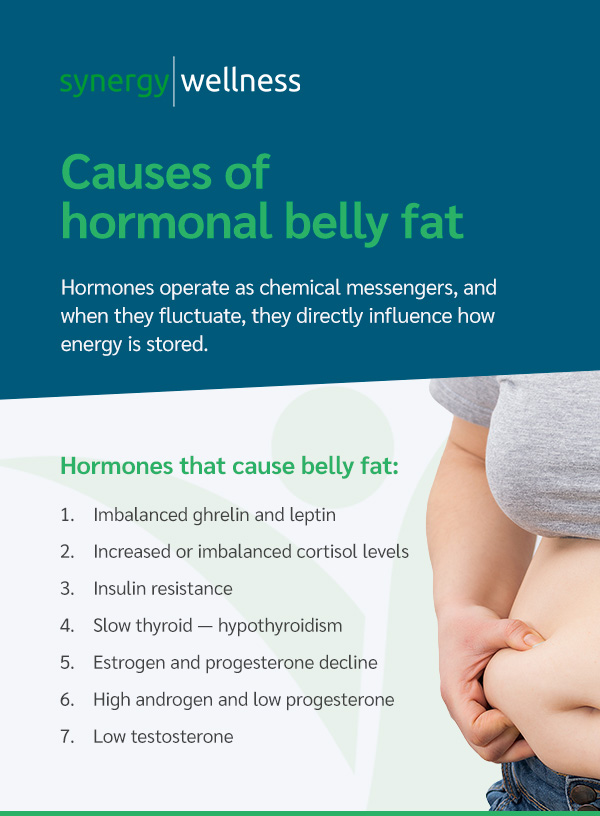
Imbalanced ghrelin and leptin
Ghrelin signals hunger, while leptin signals the brain that you’re full after eating. Sleep deprivation or chronic stress can elevate ghrelin and suppress leptin, leading to increased caloric intake. In some cases, people may develop leptin resistance, where the brain no longer responds to fullness signals. Over time, this can make you no longer feel full after eating, causing excess hunger, eating and weight gain.
Signs to watch for include:
- Constant hunger even after meals.
- Intense late-night cravings.
Increased or imbalanced cortisol levels
Stress can also increase belly fat. When stressed, the adrenal glands produce more cortisol, sending signals to the body to release glucose into the bloodstream, spiking insulin levels. This biochemical combination signals the body to prioritize fat storage in the abdominal area for rapid energy access, causing belly fat.
Chronically high cortisol can lead to Cushing’s syndrome. Some of its signs include:
- Purple stretch marks on the abdomen.
- High blood pressure.
- Anxiety.
Insulin resistance
Your body may store more belly fat as a result of insulin resistance. Insulin is a hormone produced in the pancreas. It is activated when you eat, allowing glucose to enter your cells and provide energy to the body. It also helps regulate blood sugar levels. If your cells become resistant to insulin, they can’t store glucose like they should, resulting in high blood sugar and affecting how your body stores fat.
Signs include:
- Intense cravings for sugar or carbs.
- Feeling tired or “crashing” immediately after eating.
- Skin tags.
Slow thyroid — hypothyroidism
When your body doesn’t produce enough thyroid hormones to meet your needs, it causes many of the body’s functions to slow down, including the process of burning energy from the food you eat. An underactive thyroid can cause belly fat as your body burns energy from the food you eat at a slower rate.
Some hypothyroidism signs include:
- Cold feet.
- Thinning hair.
- Dry skin.
Estrogen and progesterone decline
Menopause often increases belly fat. Estrogen is primarily responsible for regulating insulin and body weight. As hormone levels decline during menopause, fat storage tends to shift from the hips and thighs to the visceral abdominal area. Menopause impacts most women after age 45 when the ovaries stop producing estrogen and progesterone. Since it occurs later in life, age and changes in diet and exercise can also lead to belly fat.
Examples of menopause signs:
- Hot flashes.
- Night sweats.
- Mood swings.
High androgen and low progesterone
Polycystic ovary syndrome (PCOS) is often characterized by high levels of androgens or male hormones, low progesterone and insulin resistance. This complex hormonal imbalance often results in stubborn weight gain around the midsection.
Several signs include:
- Irregular or missed periods.
- Excess facial or body hair.
- Adult acne.
Low testosterone
As men age, testosterone levels naturally decline. When levels drop too low, muscle mass decreases and body fat, specifically visceral belly fat, increases. This condition is often accompanied by increased cortisol levels.
A few signs include:
- Low libido.
- Erectile dysfunction.
- Loss of muscle strength.
Diagnosing hormone imbalances that lead to weight gain
Professional testing offers the necessary clarity to create a more effective treatment plan. Common diagnostic tools include:
- Blood panels: Your doctor can check hormone levels to reveal hidden imbalances.
- Waist-to-hip ratio: A measurement that helps determine if you are storing high levels of visceral fat.
- DEXA scans: These body composition scans can differentiate between subcutaneous and visceral fat mass.
How to get rid of hormonal belly fat
With today’s modern lifestyle, hormone imbalances are becoming increasingly common due to stress and other factors. Fortunately, you can make some lifestyle adjustments to your everyday routine to help get your hormones back on track and get rid of hormonal belly fat*. Here are some top tips for how to reduce belly fat and combat hormonal misfiring.
Nutritious diet
Protein influences many hormones that control your appetite and the amount of food you eat. Making sure you include high-protein foods in your diet can help you avoid overeating. Other nutritious foods for hormonal belly fat include:
- Whole grains.
- Fresh fruits.
- Vegetables.
- Lean meats.
- Fatty fish.
Sugary foods that contain fructose increase insulin levels and promote insulin resistance, so avoiding these foods may be instrumental in getting your hormones on the right track. It’s also essential to avoid processed fatty foods and excessive caffeine intake to get rid of your hormonal belly*.

Regular exercise
According to the Centers for Disease Control and Prevention (CDC), you should aim for 150 minutes of weekly, moderate-intensity activity, as well as two days of muscle-strengthening activity for optimal body function. Exercise is excellent for keeping your hormones in check. If you’re searching for tips on how to lose hormonal fat, exercise is the perfect opportunity to burn belly fat and calories*.
Supplements to reduce cortisol and belly fat
Certain nutrients can help regulate hormones and reduce hormonal belly fat, supporting your wellness journey. They include:
- Magnesium and Ashwagandha: Lower cortisol levels, improve sleep quality and calm the nervous system
- Omega-3 fatty acids: Improve insulin sensitivity and reduce visceral fat inflammation
- Berberine: Lowers blood sugar levels and improves how your cells respond to insulin
- Selenium and zinc: Convert thyroid hormones to their active form to support your metabolism
- Black cohosh: Manages hot flashes and mood swings during menopause
- Inositol: Improves insulin sensitivity and promotes regular ovulation and hormonal balance when suffering from PCOS
- Vitamin D: Maintains healthy testosterone levels and muscle mass
Stress management
When you are chronically stressed, your body stays in survival mode, holding onto fat stores for emergency energy. Incorporating daily practices like mindfulness meditation, deep breathing exercises or getting high-quality sleep can lower cortisol levels naturally. By managing your stress response, you signal to your body that it is safe to lose weight.
Alternative hormonal belly fat treatments
Hormonal belly fat is common for many people, and it can be tricky to burn off that excess belly fat. Fortunately, some treatment options can also help with this process, including:
- Thyroid hormone replacement therapy: Thyroid hormones are a common cause of hormonal imbalances that cause weight gain in the abdominal area. At Synergy Wellness, we offer thyroid hormone replacement therapy, which includes replacing your thyroid hormone with more youthful or active levels. Thyroid hormone replacement is an excellent option to help get those hormones back on track, helping you lose that pesky lower belly fat*.
- Body shaping procedures: We also offer several body shaping procedures designed to help you achieve your ideal body image and weight. At Synergy Wellness, we are dedicated to providing you with advanced and affordable body shaping and fat removal techniques designed especially for your body and goals. We can help you achieve excellent results and experience a new boost of self-confidence*.
Contact Synergy Wellness to schedule a medical weight loss consultation
At Synergy Wellness, we understand that hormones and belly fat sometimes go hand in hand. We can help you treat and reset your hormones to help you start losing hormonal weight*. We offer personalized weight loss plans designed especially for you and your needs to help you live a happy and healthy lifestyle.
Contact us today to learn how we can help you lose hormonal belly fat.
*Disclaimers:
- Weight loss results vary and are not guaranteed.
- *Supplements interact differently with everyone’s body chemistry. Discuss any new additions with a medical specialist to ensure they are safe for your specific needs and current health profile.
Learn More